Roofing problem guidance

What Ceiling Stains Usually Mean

Water Stains on Ceiling usually means something's quietly going wrong up there - a leak, storm damage, aging materials, or a failed roof component. Better to know now than to find out when the ceiling starts dripping.

  • Fast help for leaks and storm damage
  • Repair and replacement estimate requests
  • Simple online request process
  • Emergency leak help available
Roofing Champs roofing help for homeowners
Roof repair, replacement, and inspections Emergency leak help available Fast estimate requests Homeowner-friendly process

Free roofing estimate request

Check roofing help in your area.

Start with your ZIP. We'll use the next step to understand the roof issue.

We'll confirm local availability before routing the request.

Why This Warning Sign Matters

Damage context: roof problems can move into insulation, ceilings, walls, and electrical areas if the source is not identified.

Getting the issue checked early lets homeowners compare repair, inspection, or replacement options before the next storm creates a more urgent decision.

Should Homeowners Inspect This From The Roof?

Ground-level photos, attic checks, and visible interior symptoms are safer starting points. Walking the roof, tracing leak paths, replacing flashing, or assessing storm damage should be handled by a qualified roofing professional.

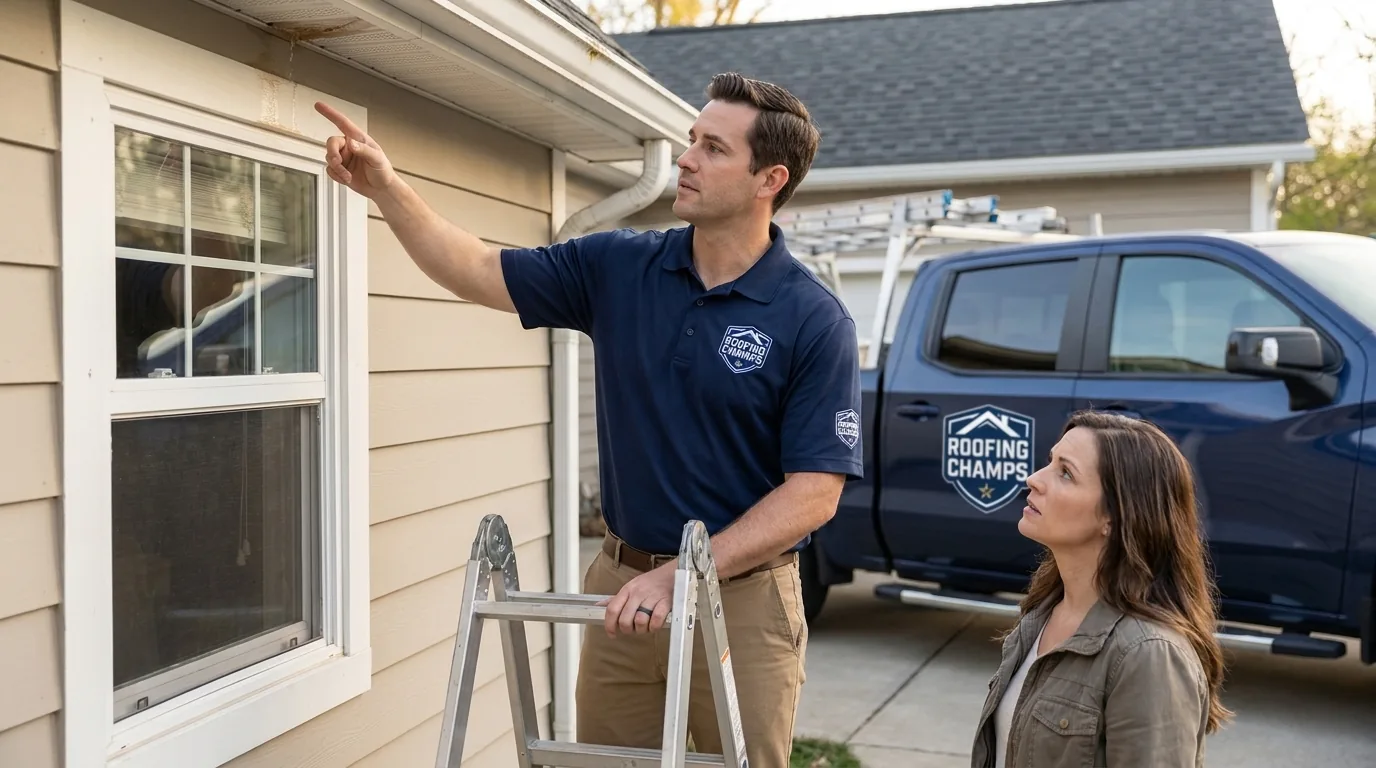
Decision fit mapping

Repair, Inspection, or Replacement for Water Stains On Ceiling

Choose repair when the damage is isolated.

Repair fits: Repair fits when the water stains on ceiling traces to one visible opening or one roof component. The trade-off is a faster, narrower scope versus the possibility that nearby aged materials fail later.

Choose inspection when the cause is unclear.

Inspection fits: Inspection fits when the cause is not obvious after checking ceilings, attic access, and exterior roof edges. The trade-off is one more diagnostic step versus approving work before the true water path is known.

Choose replacement when failures repeat.

Replacement fits: Replacement fits when the same warning sign returns after repair or appears in several rooms or roof sections. The trade-off is higher upfront cost versus solving more of the roof system at one time.

For water stains on ceiling, the useful first question is not "Can this be patched?" The useful question is whether the observed pattern points to a contained defect, an uncertain water path, or a roof-wide issue. water stains on ceiling after weather, age, or roof-component failure

Quantified option differentiation

Numbers That Change the Recommendation

A same-day request matters when water is entering living space, electrical areas, or attic insulation. A 24-72 hour inspection window usually fits stains with no active dripping. A 15+ year asphalt roof with repeated leaks deserves a repair-versus-replacement comparison instead of another patch by default.

What To Compare

Compare next steps by stain color, stain growth, room location, attic moisture, rain timing, and whether the mark feels damp. At the property, weather exposure and roof age changes how quickly a small defect can become a larger roof-system issue.

Technical feature to use case

Roof Details That Matter For The Job

Stain growth

Stain growth matters when water is still active.

Attic inspection

Attic inspection matters because water may travel along rafters.

Insulation condition

Insulation condition matters when moisture has spread beyond the ceiling mark.

Flashing

Flashing matters when stains appear near exterior walls.

The most relevant detail here is not the part name; it is the situation where the part fails. For water stains on ceiling, water stains on ceiling after weather, age, or roof-component failure make the inspection focus different from a generic roof checklist.

Related help

Companion Guides

Answers for homeowners

Frequently Asked Questions

What actually causes water stains on ceiling?

Could be age, weather, failed flashing, damaged shingles, roof penetrations, drainage problems, or storm impact. Often it's more than one of those stacking up at the same time.

When should I request help?

Sooner is almost always better. Definitely don't wait if water's coming in, damage is visibly spreading, or you're not sure the roof is safe to even look at.

Could this mean I need a whole new roof?

Maybe - but not automatically. Replacement depends on roof age, how much damage there is, leak history, material condition, and what a real inspection finds. One warning sign isn't a death sentence for the roof.

Call Now for Roofing Help