Storm leak mitigation requests

Temporary Storm Cover Before Water Spreads

Storm damage, active leak, fallen branch, or exposed roof decking? Roofing Champs helps homeowners request emergency roof tarping and urgent roofing help.

  • Fast help for leaks and storm damage
  • Repair and replacement estimate requests
  • Simple online request process
  • Emergency leak help available
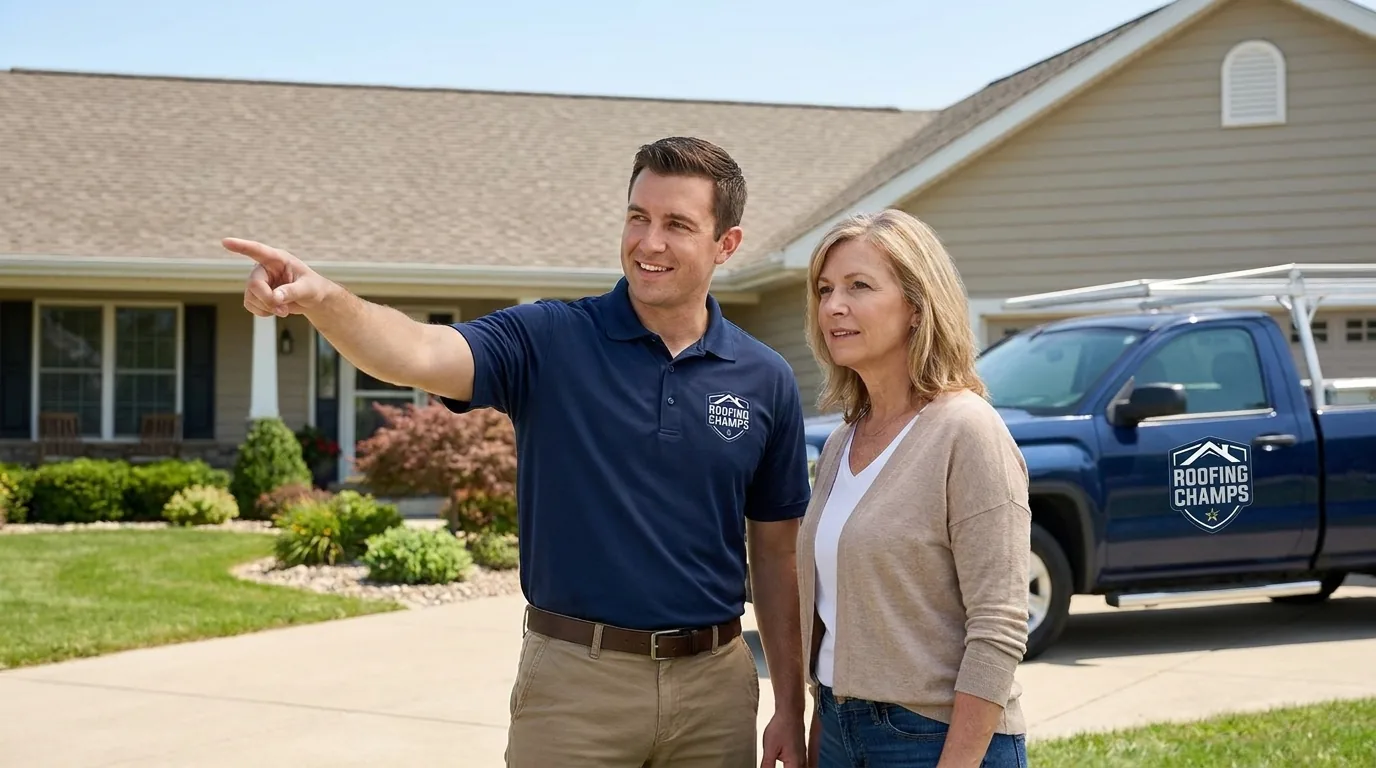
Roofing Champs roofing help for homeowners
Roof repair, replacement, and inspections Emergency leak help available Fast estimate requests Homeowner-friendly process

Free roofing estimate request

Check roofing help in your area.

Start with your ZIP. We'll use the next step to understand the roof issue.

We'll confirm local availability before routing the request.

When water is entering now

Temporary Protection Can Limit Interior Damage

Urgent situation: if water is entering the home and more rain is expected, the priority is temporary protection followed by a permanent repair plan.

Tarping is a short-term cover that slows interior damage while permanent repair gets scheduled. It will not fix the roof, but it can help protect drywall, insulation, electrical areas, and belongings from additional water exposure.

Active interior leaksMissing shinglesExposed deckingFallen branch impactWind or storm damage

Decision fit mapping

Tarping, Repair, or Replacement - Which Path Fits Right Now?

Choose emergency tarping when water is actively entering the home.

This path fits when you have visible roof damage, rain is still expected, and permanent repair cannot be scheduled the same day. Trade-off: Tarping is temporary and degrades fast - you still need permanent work scheduled within days to weeks.

Choose permanent repair when the damage is contained but not actively flowing.

This path fits when the storm is over, the roof has one clear opening, and the surrounding shingles are intact. Trade-off: You skip tarping fees but the home is unprotected until the crew arrives - acceptable only if no more rain is forecast.

Choose replacement-track planning when damage spans multiple slopes.

This path fits when you see widespread shingle loss, missing decking, or repeat-leak history on top of the new storm damage. Trade-off: Higher upfront cost than tarp-and-patch, but it resets the roof system instead of buying short-term time.

When you're weighing options for emergency roof tarping, The right path depends on the situation - not the cheapest line item. Roofing Champs routes urgent storm requests to local pros who can scope tarping plus permanent repair in one visit when conditions allow.

Quick facts about emergency tarping

What Roofing Champs Handles

When tarping actually fits

Situations That Call For Emergency Tarping

Active interior leak

Water is dripping into ceilings, walls, attic insulation, or near electrical fixtures while more rain may still be coming.

Missing shingles or exposed decking

A section of roof is open to weather because shingles blew off, hail punched through, or wind ripped material away.

Fallen tree or branch impact

A limb or full tree hit the roof and cracked decking or tore through layers. Even without active leaking, temporary protection may be needed.

Storm or wind damage

Visible roof damage with more rain in the forecast should be evaluated quickly before water spreads indoors.

Why fast matters

What Tarping Can Help Prevent

  • More water soaking into living space, attic areas, and insulation.
  • Additional drywall, paint, ceiling, and contents damage.
  • Higher mold risk in materials that stay damp for days.
  • Claim issues tied to mitigation requirements. Many policies expect homeowners to limit further damage after a covered event.

Insurance prep

What To Photograph Before You Tarp

Take time-stamped photos of interior leaks, soaked materials, exterior damage, and any debris that hit the roof. Save receipts for emergency supplies or services. Note when leaks started, the storm date, and wind direction if relevant.

That documentation can help connect the temporary protection, permanent repair scope, and insurance claim timeline.

What happens after you submit

From Request To Permanent Repair

  1. Tell us what happened: storm damage, fallen branch, visible opening, active leak, or another urgent roof problem.
  2. Share where the property is and any photos you have. Even basic phone photos can help with routing.
  3. Request urgent help so temporary protection can be arranged before the next rain.
  4. Plan permanent repair or replacement once the immediate water entry is under control.

Tarping vs Permanent Repair

Tarping is a temporary cover. Permanent repair restores the shingles, underlayment, flashing, decking, or membrane that keeps weather out. A tarp left up too long can trap moisture, hide damage, and degrade the materials underneath, so the permanent repair should be scheduled promptly.

Emergency Roof Repair

Follow-up answers

Quick Answers To What You're Probably Asking Next

So what does a tarp actually cost?

Emergency tarping pricing varies by roof access, tarp size, and how urgent the response is - expect a service-call charge plus materials. Many homeowners ask whether insurance reimburses it; the short answer is usually yes when there's a covered event, which is why documentation matters so much.

Will my insurance company require tarping?

Most policies require homeowners to take reasonable steps to limit further damage after a covered event. Tarping is the canonical example. Skipping it can give the insurer grounds to reduce the claim later, even if the rest of your documentation is clean.

What if the storm hits at night - can someone still come out?

Depends on conditions. Tarping a wet, dark roof during active wind is dangerous, and most pros will set up indoor containment first, then return at first safe light. If a contractor promises overnight roof work in a storm, ask about their safety protocols.

Answers for homeowners

Frequently Asked Questions

How fast should a roof be tarped?

As soon as safe roofing help can be arranged. Every hour water keeps entering can mean more drywall, insulation, and interior damage to address later. If shingles are missing or there is a visible opening, treat it as urgent.

Does insurance cover emergency roof tarping?

Many homeowner policies cover reasonable mitigation costs after a covered event because tarping can limit additional damage. Coverage depends on your policy, the cause of damage, and your documentation. Save receipts and photos.

How long can a tarp stay on a roof?

Think days to a few weeks, not months. Tarps degrade fast under UV, wind, and rain. The longer one sits, the more likely it is to fail at the worst possible moment - so get permanent repair scheduled while the tarp is still doing its job.

Can tarping stop every roof leak?

No. Tarping covers exterior openings and slows water entry. It cannot reroute water that is already trapped in the assembly, and it will not fix a leak from interior plumbing or condensation. If water continues after tarping, the source may be elsewhere.

What should I do before roofing help arrives?

Move belongings away from the drip zone. Put buckets or containers under active leaks. Photograph the damage inside and out. Do not climb onto a wet or damaged roof yourself.

Is tarping the same as roof repair?

No. Tarping is temporary protection that buys time. Real repair restores the shingles, flashing, decking, or membrane so the roof seals again. The permanent repair still needs to be scheduled.

Request Emergency Roof Tarping

If water is entering now, start the request and share the details you have.

Get Urgent Roofing Help

Call Now for Roofing Help