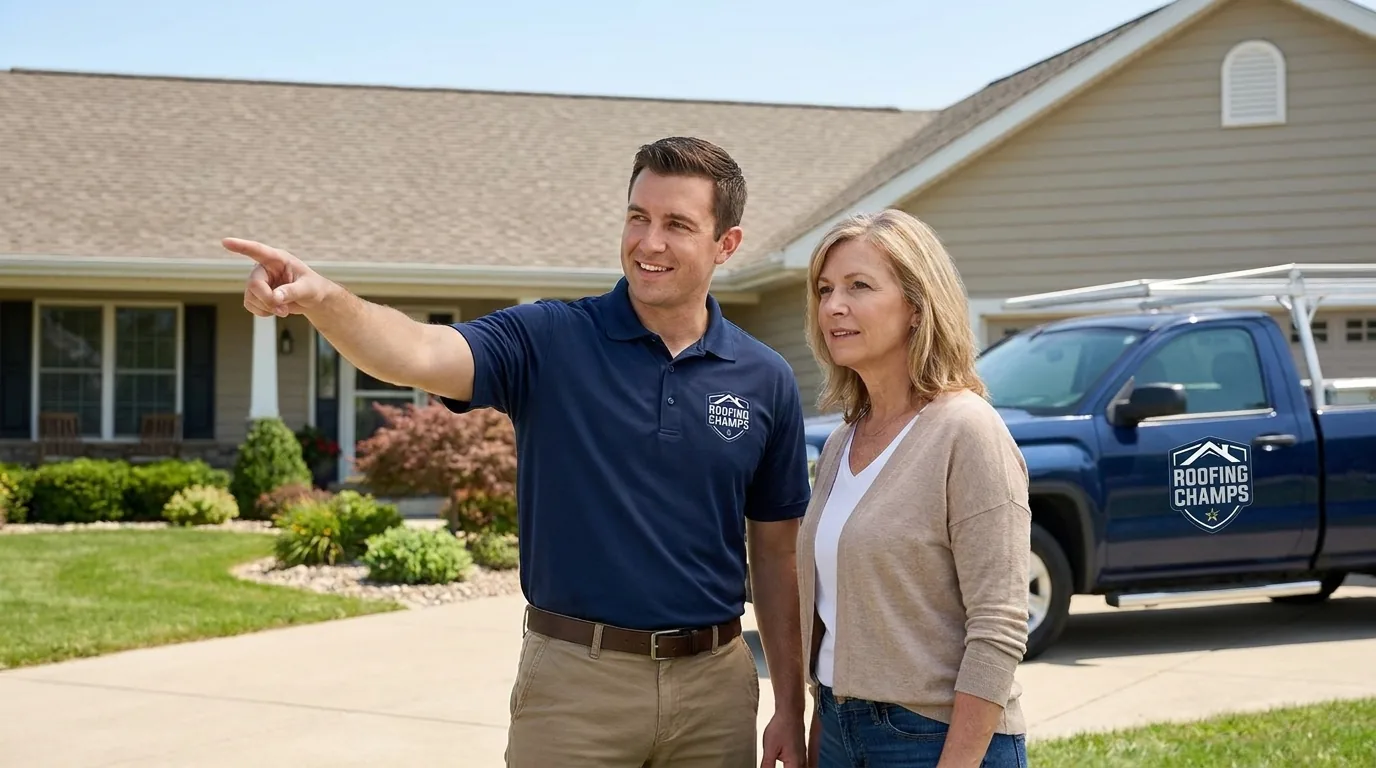
California roofing project planning

What California Homeowners Should Know About Roofing Permits

Planning roof repair or replacement in California? Learn how permits, inspections, materials, energy rules, and local building requirements may affect your project.

  • Fast help for leaks and storm damage
  • Repair and replacement estimate requests
  • Simple online request process
  • Emergency leak help available
Roofing Champs roofing help for homeowners
Roof repair, replacement, and inspections Emergency leak help available Fast estimate requests Homeowner-friendly process

Free roofing estimate request

Check roofing help in your area.

Start with your ZIP. We'll use the next step to understand the roof issue.

We'll confirm local availability before routing the request.

Important context for CA homeowners

Every City And County Has Its Own Rulebook

Heads up: California permit and inspection rules vary by city, county, and project scope - and cool roof / energy requirements add another layer. This page is general guidance, not a substitute for talking to your local building department.

Here's what's mostly true across the state: roof replacements involve a permit, at least one inspection, and material rules that may include cool roof standards. Repair-only projects usually follow a simpler path. And whether you're in the Valley (heat, UV, dry season), Bay Area (mixed climate, seasonal rain), or LA / South Bay (marine air, occasional atmospheric river) changes what the estimate should actually account for.

Repair vs replacement

Scope Determines The Permit

Small repairs - a few shingles, one flashing detail, a vent boot - usually count as maintenance. Full replacements and structural repairs almost always need a permit and inspection. When you're not sure where your project falls, ask the contractor to confirm with the local building department first. If they push back, that tells you something.

Repair vs replacement guide

City and county review

When The Inspector Shows Up

Most California jurisdictions inspect after tear-off and again at completion. Your roofer should schedule these so they can be present, and so the work isn't buried under new material before sign-off. If they're vague about timing, push for specifics.

Cool roof and energy

Material and Energy Information That Matters

Heat and UV

Long sun exposure dries out sealants, makes shingles brittle, and accelerates granule loss on darker roofs. After ten Valley summers, the difference shows.

Fire exposure

Some areas require Class A fire ratings and specific assemblies - this matters more than ever after recent wildfire seasons. Your material has to match local code.

Ventilation

Balanced attic ventilation manages heat and moisture under the new roof. Skip it and a new roof can age fast.

Seasonal rain

Those few rainy weeks each year test the flashing, underlayment, and low-slope drainage on a roof that spent months in dry heat. First-rain leaks are a real thing here.

If you've got a flat section

Flat and Low-Slope Considerations

A lot of California homes have flat or low-slope additions - the patio cover, the garage roof, the rear extension. Membrane choice, slope to drain, scuppers, and seam detailing matter way more on those sections than on the steeper main roof. If water sits more than 48 hours after rain, that's not just a maintenance thing to put off until next year - it's a planning signal. The membrane and drainage need a closer look.

Tear-off vs overlay

Why Most CA Projects Should Just Tear Off

Some jurisdictions allow one overlay on a sound roof. Others require tear-off, especially when underlayment, flashing, or decking need review. In most cases, Even when overlay's legal, tear-off is usually the smarter call. It lets the crew confirm what's underneath, replace what's failing, and install new flashing properly. Overlay is rarely a good fit on a wavy, leaking, or already-layered roof - and "saving money on overlay" tends to mean "paying for it again in five years."

Before you sign anything

What To Ask Before Approving The Estimate

Who pulls the permit?

Contractor pulls it. Fees included in the price, not a surprise later. In writing.

Are inspections covered?

Required inspections scheduled and attended by the contractor. Not you.

Are code upgrades included?

Cool roof, ventilation, fire-rated assemblies - all spelled out as part of the scope or called out separately. Don't let these become "oh, we forgot to mention" line items.

Is decking replacement separate?

Damaged decking is usually a change order because hidden damage isn't visible until tear-off. Ask for the per-sheet allowance up front so you can budget the worst case.

Are disposal and tear-off included?

Tear-off, dumpster, cleanup, disposal. All of it. Confirm in writing.

Decision fit mapping

Repair, Replacement, or Emergency - Different Permit Paths

Choose the repair-scope path when work is small and maintenance-grade.

This path fits when you're replacing a few shingles, one flashing detail, a vent boot, or doing minor patching. Trade-off: Often no permit required, but the local building department has final say - confirm before you sign anything.

Choose the full-replacement permit path when scope is roof-wide.

This path fits when you're doing tear-off, re-roof, cool-roof material change, or structural repairs that touch decking. Trade-off: Permit, energy compliance review, and inspections - but the result is code-compliant work and resale-protected documentation.

Choose emergency mitigation when active water is the issue.

This path fits when a storm, fallen branch, or sudden opening is letting water in and rain is expected. Trade-off: Mitigation tarping does not wait on permits. The permanent repair that follows still goes through the normal city or county permit process.

When you're weighing options for California roofing permits, The right path depends on the situation - not the cheapest line item. Roofing Champs helps CA homeowners scope projects so cool-roof, fire-rated, and ventilation requirements don't surprise the estimate mid-project.

Quick facts about California roofing permits

What Roofing Champs Handles

Follow-up answers

Quick Answers To What You're Probably Asking Next

What about HOA approval - does that come before or after the permit?

Usually before. Many California HOAs require material and color approval before any work starts, and they don't care that your permit is already pending. Check the CC&Rs first to avoid an expensive halt mid-tear-off.

Is solar interaction a permit issue?

It can be. If panels are present, the contractor may need to coordinate with a solar provider to remove and reinstall - and that triggers its own permits in some jurisdictions. Build the timeline accordingly.

What about wildfire-area roofing rules?

Higher fire zones often require Class A assemblies and specific underlayment combinations. Not every contractor handles those well. Ask specifically whether they've done permitted work in your fire-hazard zone before.

California service areas

Roofing Help In Your CA Town

Answers for homeowners

Frequently Asked Questions

Do I need a permit for roof work in California?

Depends on the city, the county, and what you're doing. A small repair might slide; a full replacement basically always needs one. Different jurisdictions have different rules - call the local building department before you sign anything.

What's a cool roof requirement?

Some California jurisdictions require cool-rated roofing materials on certain projects to hit energy goals. Mostly that means lighter colors or reflective surfaces. Your roofer should be able to explain how it affects your material choice - and if they shrug, get a second opinion.

Can I just install a new roof over the existing one?

Some local codes allow one overlay on a sound roof. But honestly, most California projects favor tear-off because it lets the crew actually see the decking, flashing, and underlayment - and replace what's failing. Overlay hides problems that come back later.

Who pulls the permit?

The licensed contractor, in almost every case. Get it in writing. Confirm permit fees are included in the estimate, not surprise add-ons later.

Does the permit include inspections?

Most California cities and counties schedule one or more inspections during a re-roof - usually after tear-off and again at completion. The contractor should coordinate these so the work isn't closed in before the inspector sees it.

Plan A California Roofing Project

Share the property location, project scope, and what shape the roof's in. We'll help sort out the next step.

Request My Roofing Estimate

Call Now for Roofing Help